Cystic Acne Scar Treatment: How to Smooth Out Deep Scars
 August 13, 2026 |
  Author
Cystic acne is one of the most severe forms of acne, and the scars it leaves behind can be just as challenging as the breakouts themselves. When deep nodules and cysts burst, they can damage the surrounding skin in ways that are difficult for the body to fully repair. The result is often a mix of depressed pits, uneven texture, and stubborn marks that remain visible long after the active acne has cleared. The good news is that cystic acne scar treatment has come a long way. Dermatologists now have a range of medically proven procedures that can smooth out deep scars and give the skin a more uniform appearance.
Why Cystic Acne Leaves Deep Scars
Any type of acne spot can lead to scarring, but scarring is more common when the most serious types of spots, namely nodules and cysts, burst and damage the skin around them. These deep lesions reach far beneath the surface, so when they rupture, the damage extends into the layers of skin responsible for maintaining a smooth, even texture. Severe acne scars form as a result of inflammation and uneven collagen healing, which can leave behind depressed marks, raised tissue, and lingering dark spots. Daily habits matter too. Scarring can also occur if you pick or squeeze your spots, so it is important not to add extra trauma while a cystic lesion is healing.
Types of Deep Acne Scars
Understanding the type of scar you have is the first step in choosing an effective cystic acne scar treatment. Most deep scars fall into a few recognizable categories.
- Ice pick scars: Ice pick scars are small, deep holes in the surface of the skin that look as if the skin has been punctured with a sharp object. These narrow channels extend below the surface, which is why they rarely respond to topical products alone.
- Rolling scars: Rolling scars are caused by bands of scar tissue that form under the skin. Instead of distinct holes, rolling scars give the skin a wavy, uneven appearance that can be especially noticeable in certain lighting.
- Boxcar scars: Boxcar scars are another category commonly described alongside ice pick and rolling scars in dermatology resources. A dermatologist can identify which scar types you have and recommend the treatment approach most likely to smooth them.
Professional Cystic Acne Scar Treatment Options
Many options are available for the treatment of acne scarring, including chemical peeling, dermabrasion, laser treatment, punch techniques, and fat transplantation. Some of the most popular in-office procedures include lasers, microdermabrasion, chemical peels, fillers, and surgery. Because cystic acne scars are often deep, a dermatologist may combine several methods to achieve the smoothest result.
Laser Resurfacing and Fractional CO2
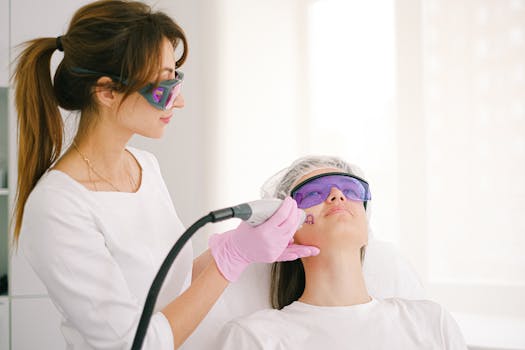
Laser resurfacing is a popular non-surgical treatment for improving the appearance of acne scars. It works by stimulating collagen production and encouraging the skin to renew itself. For cystic acne scarring specifically, fractional CO2 laser treatment and microneedling are two of the most effective, medically proven treatment solutions available. Fractional CO2 creates controlled micro-damage in the skin, which triggers the body’s natural repair process and helps smooth out deep depressions over time.
Microneedling
Microneedling is another medically proven treatment for cystic acne scarring. The procedure uses fine needles to create tiny wounds in the skin, prompting the body to produce fresh collagen as it repairs the area. Over a series of sessions, this collagen remodeling can soften the appearance of deep scars and improve overall skin texture.
Dermabrasion
Dermabrasion involves removing the top layer of skin, either using lasers or a specially made wire brush. By carefully wearing away the damaged surface, this technique allows fresh skin to grow in its place. Dermabrasion can smooth the texture of the skin and reduce the visibility of acne scars, and it is often combined with other procedures for more extensive scarring.
Chemical Peels
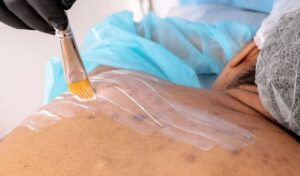
Chemical peeling is one of the many effective treatment options for atrophic acne scars. During an in-office chemical peel, a chemical solution is applied to the skin to remove damaged outer layers and encourage new cell growth. Peels can be a good choice for patients who want to improve skin tone and texture without more invasive procedures.
Punch Excision
Punch excision is a minor procedure used for individual acne scars. During the treatment, your doctor cuts out the scar and repairs the wound with stitches or a skin graft. This method removes the damaged tissue entirely, allowing the skin to heal with a smoother, more even surface. Punch techniques are recognized as an effective option for acne scarring.
Steroid Injections
Steroid injections are used for scars that sit above the normal surface of the skin. Steroids are injected directly into a scar to soften the scar tissue, which can reduce its height. Usually you need several steroid injections to see the full benefit, so this treatment is planned over time rather than completed in a single visit.
Fillers and Fat Transplantation
Fillers and fat transplantation both add volume beneath a depressed scar, lifting it up to match the surrounding skin. Injectables and in-office procedures can produce a smoother contour, while fat transplantation is listed among the recognized treatment options for acne scarring. These approaches are often used as part of a broader treatment plan.
Surgery
Surgery is also listed among the popular in-office procedures used to treat acne scars. In selected cases, surgically revising the scar can improve the contour of the skin, particularly when other treatments have not produced the desired result.

At-Home Scar Care and Over-the-Counter Products
Not all scar care happens in the clinic. Over-the-counter products can play a supporting role, especially for scars that are still healing or for milder textural changes. Mederma Advanced Scar Gel, for example, is designed to treat old and new scars and to reduce the appearance of scars from acne, surgery, burns, injury, and stretch marks. Silicone scar gels are another widely available option. Topical products work on the surface of the skin, however. Deep cystic acne scars extend below that surface, which is why the most effective medically proven treatments, such as fractional CO2 and microneedling, are performed by a dermatologist.
Choosing a Dermatologist for Cystic Acne Scar Treatment
Deep acne scars require a provider who understands the structure of the skin and has experience with a range of corrective procedures. A board-certified dermatologist can assess your scar type, discuss realistic outcomes, and build a treatment plan that fits your skin. For patients in the South Denver area, Colorado Dermatology Center offers acne scar revision as one of its core services. The practice is led by board-certified dermatologist Dr. James M. Swinehart, who combines more than three decades of clinical expertise with advanced medical, surgical, and cosmetic dermatology. Personalized care and proven techniques are central to the practice’s approach, with the goal of improving both skin texture and confidence.
Frequently Asked Questions
Can cystic acne scars be treated effectively?
Yes. Dermatologists can treat cystic acne scarring with several medically proven options, including fractional CO2 laser treatment, microneedling, dermabrasion, chemical peels, punch excision, fillers, fat transplantation, and surgery. The right approach depends on the type of scars you have and how your skin responds. A board-certified dermatologist can recommend a plan tailored to your skin.
Do steroid injections help acne scars?
Steroid injections can help certain types of scars. Steroids are injected directly into a scar to soften the scar tissue, which can reduce its height, and most patients need several treatments. This makes steroid injections best suited for scars that sit above the surface of the skin rather than deep depressed pits.
Can picking or squeezing cystic acne cause scarring?
Yes. Scarring can occur if you pick or squeeze your spots, so it is important not to do this. Scarring is more common when nodules and cysts burst and damage nearby skin, which is exactly the kind of trauma that picking can cause. Allowing cystic lesions to heal without manipulation is one of the best ways to minimize long-term marks.
Are over-the-counter scar products enough for deep scars?
Over-the-counter products such as Mederma Advanced Scar Gel can reduce the appearance of scars from acne, surgery, burns, injury, and stretch marks, and they treat both old and new scars. Silicone scar gels are another common option. However, deep cystic acne scars typically form below the surface of the skin, and the most effective medically proven treatments for these scars are in-office procedures.
Cystic acne scarring can feel stubborn, but the skin is capable of meaningful improvement with the right treatment. Modern dermatology offers more ways than ever to smooth out deep scars, from fractional CO2 laser therapy and microneedling to punch excision and injectable fillers. The first step is a thorough evaluation by a dermatologist who can match the treatment to the scar. With a personalized plan and realistic expectations, smoother, more even skin is an achievable goal.
 Posted in Uncategorized