
Cystic Acne Scar Treatment Options for Deep Tethered Scars
 October 5, 2026 |
  Author
 Cystic acne does its damage underneath the surface. The lesion forms deep in the skin, and when the inflammation finally calms, what remains is often not a flat mark but a structural dent held in place by fibrous tissue. That tethering is why a scar looks deeper when you smile or lift your brows. It is also why the treatment options for cystic acne scars are not the same as the options for simple post-acne redness.
Picking a plan is not about choosing the most aggressive procedure available. It is about matching the depth and number of scars you have to a technique that can actually reach them, then protecting the result while new collagen settles in.
What Makes a Cystic Acne Scar Tethered
Acne scars are the marks left behind after acne clears, and they can be treated with chemical peels, skin needling, laser, and other procedures. What changes from patient to patient is how deep the problem runs and how many scars are involved.
When a cyst heals, the skin can pull downward and attach to the tissue beneath it instead of sitting flat. The scar stays anchored, which is why it tends to look like a rolling or pitted depression rather than a spot. Because the problem is partly mechanical, a product that only exfoliates the surface will not release that tether. The scar needs a treatment that either rebuilds collagen in the deeper layers or interrupts the tension holding it down.
That distinction is the single most useful thing to understand before you compare clinics or devices. Two scars that look similar in a mirror can sit at completely different depths, and depth determines which tools are worth your time.
Why Scar Count and Depth Change the Plan
Severity drives everything. Mild scarring, meaning fewer than 10 visible scars with minimal depth, may respond well to less aggressive treatments such as superficial chemical peels. Deeper and more numerous scars generally need approaches that reach below the epidermis, where collagen remodeling actually happens.
| Scar pattern | Typical starting point |
|---|---|
| Mild scarring: fewer than 10 visible scars, minimal depth | Less aggressive options such as superficial chemical peels |
| Deeper or tethered scarring | Resurfacing approaches that reach deeper layers, including microneedling radiofrequency and laser skin resurfacing |
| Active cystic acne alongside existing scars | Medical control first, using topical treatments, oral medications for inflammation or hormone levels, and short-term anti-inflammatory care |
Notice that the third row is not really a scar treatment at all. It is acne treatment. If cysts are still forming, every new lesion is a chance for another tethered scar, so controlling the disease comes before chasing the damage it already caused.
Professional Treatment Options for Deep, Tethered Scars
In-office options overlap, and most real treatment plans combine more than one. The sections below cover the categories that come up most often in acne scar care.
Microneedling Radiofrequency
Microneedling radiofrequency, often shortened to MNRF, is one of the well-known acne scar treatment solutions. Fine needles create controlled channels in the skin while radiofrequency energy is delivered below the surface, where collagen remodeling takes place. Because the energy is deposited under the skin rather than dragged across the top, MNRF can work on scars that sit deeper than a peel is able to reach.
Morpheus8 is discussed alongside chemical peels and lasers in current acne scar treatment literature, and it falls into this same resurfacing family. If you have heard the name and wondered how it fits, the short answer is that it belongs to the energy-based group, not the topical group.
Laser Skin Resurfacing
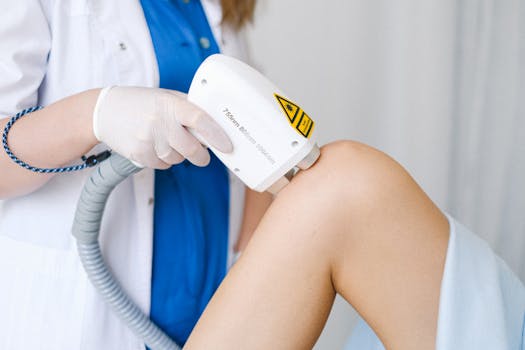
Laser skin resurfacing removes damaged skin layers and boosts collagen in deeper layers, which reduces the visibility of scars. For tethered scarring, the collagen response matters as much as the surface removal. The goal is to rebuild support under the scar so it settles closer to the level of the surrounding skin rather than sitting in a fixed depression.
Laser treatment is also useful when texture and pigment are both part of the complaint, since a single resurfacing plan can often address both rather than sending you through two separate treatment tracks.
Chemical Peels
Chemical peels are tailored to the concern being treated. Superficial peels are a reasonable starting point for mild scarring with minimal depth. For deep, tethered scars, a peel is better understood as one component of a plan than a standalone fix, useful for tone, texture, and pigmentation while a deeper treatment addresses the structural component.
This is where a lot of disappointment happens. Someone buys a package of peels expecting the depressions to fill in, and the depressions do not change because nothing in the treatment reached them. Matching the tool to the depth is the whole job.
Combining Procedures
Because a tethered scar has more than one component, plans often stack. A series of microneedling radiofrequency sessions might be scheduled with peels in between, or laser resurfacing might be reserved for specific areas while a broader resurfacing approach handles overall texture. The sequencing matters as much as the menu, and it is usually spread over multiple visits rather than completed in one appointment.
Control Active Cystic Acne First
New cysts create new scars, so a scar plan that ignores ongoing acne tends to lose ground. A treatment plan may include a retinoid on its own; a retinoid combined with benzoyl peroxide, azelaic acid, or salicylic acid; or benzoyl peroxide paired with another topical active.
Topical treatments work to reduce oil production and bacteria. Oral medications help control inflammation or hormone levels, which matters for cystic acne because inflammation is what drives the deep damage in the first place. Short-term anti-inflammatory care can also be part of the picture during a flare. Your dermatologist will match the combination to your skin, your history, and how well you tolerate each active.

What You Can Do at Home Between Visits
Home care supports professional treatment, though it does not replace it for tethered scars. Vitamin C serums can be a good option for treating acne scars at home, and aloe vera is another commonly used ingredient. Sunscreen belongs in the routine as well, because unprotected exposure works against the skin you are trying to rebuild.
Think of these products as protecting your investment. They can improve tone, hydration, and overall appearance while procedures do the structural work. They will not release a tether, and no topical product will lift a scar floor that is anchored to deeper tissue.
How Colorado Dermatology Center Approaches Scar Revision
Colorado Dermatology Center is a South Denver dermatology practice led by board-certified dermatologist Dr. James M. Swinehart. The practice covers medical, surgical, and cosmetic dermatology, with acne scar repair among its focus areas alongside skin cancer treatment, hair restoration, tumescent liposuction, and clinical research trials.
That breadth is relevant for scar patients. Acne scarring is rarely a single problem, because active breakouts, pigment change, and deep structural scars often show up together. A practice that manages medical acne and procedural scar revision under one roof can sequence those pieces instead of sending you between providers who never compare notes. The practice is also known for offering procedures that many others do not, with an emphasis on personalized care and natural-looking results.
Questions to Bring to a Consultation
A scar consultation is more productive when you arrive with specifics. These are the questions that tend to shape a plan.
- Which of my scars are tethered, and which are surface-level texture or pigment?
- Which procedure actually reaches the depth of my deepest scars?
- How will my active acne be controlled while we work on scarring?
- What is the realistic sequence of treatments, and how many visits does it involve?
- What does recovery look like between sessions, and what should I do at home?
Ask for a realistic picture rather than a promise. Deep, tethered scars can improve meaningfully, but improvement is the honest word. A plan built around your actual scar pattern will always outperform a package sold without looking at your skin.
Frequently Asked Questions
Do deep cystic acne scars go away on their own?
Flat marks left after acne can fade over time, but tethered scars are structural and generally do not resolve without treatment. The tissue is anchored below the surface, so there is nothing for the skin to remodel on its own. Options such as microneedling radiofrequency, laser resurfacing, and chemical peels are used to improve them, and results build over a series rather than a single visit.
Can I treat tethered cystic acne scars at home?
At-home products can support tone and texture, and options like vitamin C serums and aloe vera are commonly used for acne scars at home. They cannot release a tether anchored in deeper tissue. Think of home care as maintenance around professional treatment, not a substitute, especially when scars are deep or numerous.
Should I treat active cystic acne and scarring at the same time?
Usually the acne gets controlled first, or at least concurrently, because new cysts create new scars. A plan may include a retinoid, a retinoid with benzoyl peroxide, azelaic acid, or salicylic acid, or oral medications that help with inflammation or hormone levels. Your dermatologist will decide what can safely run alongside scar procedures.
How many treatments will deep acne scars need?
It depends on scar depth, scar count, and which procedures are combined. Mild scarring with fewer than 10 visible scars and minimal depth may respond to less aggressive options like superficial chemical peels, while deeper tethered scarring typically needs a series of resurfacing sessions. Ask your dermatologist for a realistic sequence rather than a fixed number before your skin has been evaluated.
Which is better, laser resurfacing or microneedling radiofrequency?
Neither is universally better, and the choice depends on your scarring and skin. Laser skin resurfacing removes damaged surface layers and boosts collagen in deeper layers, while microneedling radiofrequency delivers energy below the surface through fine needles. Both are used for acne scarring, and many plans combine categories rather than choosing one exclusively.
If your scars are deep and tethered, the most valuable next step is an evaluation that identifies which scars are structural and which are not. That assessment is what turns a list of procedures into an actual plan, and it is the difference between spending money on treatments that suit your skin and spending it on treatments that suit someone else’s.
 Posted in Procedures