Screening for Skin Cancer: What the Exam Covers and Who Should Book One
 November 3, 2026 |
 Author
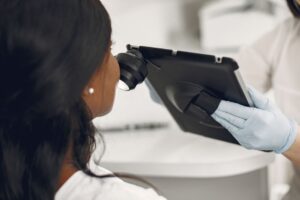
Screening for skin cancer is one of the few cancer checks that happens mostly with the eyes. No needles, no blood draw, no imaging machine. A clinician looks carefully at your skin, notes anything that seems off, and decides what, if anything, should happen next.
That simplicity can make the exam sound less important than it is. A regular skin exam by a health professional can help find skin cancer early, and a 2023 evidence report published in JAMA noted that a substantial body of nonrandomized evidence suggests a clear association between earlier stage at detection and lower mortality. Early detection is the whole point of the visit. What follows is a plain description of what the exam involves, how it differs from the checks you do at home, and how to think about booking one.
What a Skin Cancer Screening Actually Is
A skin cancer screening is a visual inspection of the skin for suspicious lesions. That is the core of it. One widely shared description of these exams states plainly that screening does not involve blood tests, which surprises some people who assume a cancer check must include lab work.
During a skin exam, a doctor or nurse checks the skin for moles, birthmarks, or other pigmented areas that look abnormal in color, size, shape, or other features. The clinician is not looking for one specific spot. The goal is a survey of the skin as a whole, because a lesion that looks unremarkable in isolation can still stand out when compared with the skin around it or with other marks on the body.
The visual inspection
The exam relies on trained eyes and comparison. A clinician notes the color of a spot, its size, its shape, and any other features that set it apart from nearby skin. Moles and birthmarks that have changed, or that simply look different from the rest, tend to draw attention. Because the entire assessment is visual, the quality of the exam depends on the clinician being able to see your skin clearly and on your being able to point out anything that has been on your mind.
What the exam does not include
The screening visit itself is not a blood test and does not produce a lab result. The sources reviewed for this article do not describe routine use of dermoscopy, biopsy, or other follow-up procedures during screening, so it is reasonable to ask your clinician what tools they use and what happens if something looks suspicious. If a spot needs closer evaluation, that is a separate conversation from the initial look.
Screening Exam vs Monthly Self-Exam
Professional screening and self-examination are complementary rather than competing. A professional exam is described as a way to help find skin cancer early. Self-exams are described as a simple, powerful way to detect skin cancer early, and the Skin Cancer Foundation advises examining your skin head to toe every month.
During a self-check, look for new moles, growths, blemishes, freckles, and similar changes. The value of the habit is familiarity. Once you know how your skin normally looks, a new or shifting spot is easier to notice, and you have something concrete to describe when you do see a clinician. The sources reviewed do not compare which method is more effective, so treat them as two parts of one routine rather than a choice between options.
| Feature | Professional skin exam | Monthly self-exam |
|---|---|---|
| Who performs it | A doctor or nurse | You |
| What it involves | Visual check for moles, birthmarks, or pigmented areas that look abnormal in color, size, shape, or other features | Head-to-toe check for new moles, growths, blemishes, freckles, and changes |
| Blood tests | Not part of screening | Not applicable |
| Stated purpose | Can help find skin cancer early | Can help detect skin cancer early |

Who Should Consider Booking One
This is the part where readers most often want a cutoff: a starting age, a number of years between visits, a list of conditions that automatically qualify. The sources reviewed for this article do not include guideline details on the recommended age to start screening, screening frequency, or eligibility criteria for average-risk and higher-risk groups. Anyone presenting a single universal rule is going beyond what that evidence base supports.
What the sources do support is more practical. If you have noticed a new mole, growth, blemish, or freckle, or a change in one you already had, that is a reasonable reason to raise it with a clinician. If you would simply like a professional to look over your skin, a regular skin exam can help find skin cancer early, and asking about it is a normal request. People with a personal or family history of skin cancer, or other concerns about their own risk, should ask their own clinician how screening applies to them rather than relying on a general article.
Self-exams help here too. A monthly head-to-toe check gives you a record of what is normal for your skin, so that a conversation with a clinician starts with specifics instead of a vague sense that something changed.
What the Research Does and Does Not Show
The 2023 JAMA evidence report by Henrikson and colleagues concluded that a substantial nonrandomized evidence base suggests a clear association between earlier stage at skin cancer detection and decreased mortality. In plain terms, skin cancers found at an earlier stage are linked to better outcomes, and that link is consistent across a large body of observational evidence.
That is not the same as proof that screening programs themselves reduce deaths. The association described is not randomized, and the sources reviewed do not establish that routine screening lowers mortality in average-risk adults. Both ideas can be true at once: catching skin cancer earlier matters, and the case for universal screening of everyone is less settled than the case for early detection. If you want the current position that applies to your situation, ask your clinician directly.

Free and Low-Cost Screening Options
Cost is a real barrier, and one program is explicitly described as free. Destination Healthy Skin is a mobile skin cancer screening and education program that travels around the country, offering free screenings along its route. The sources reviewed do not list specific locations, dates, or a schedule for the program, so check the program’s own current information before planning around it.
Health systems also run their own screening events. UChicago Medicine, for example, lists a phone number for scheduling skin cancer screening appointments, with 1-888-824-0200 associated with that institution. That number is specific to UChicago Medicine and is not a national screening line, so use it only if that health system is relevant to you. For anything local, start with the scheduling line of the dermatology practice or health system you would actually visit.
Insurance coverage and out-of-pocket cost for skin cancer screening are not addressed in the sources reviewed here. Only Destination Healthy Skin is described as free. Confirm coverage with your insurer and the practice before you book, since the answer depends on your plan and on how the visit is coded.
Getting the Most From the Appointment
A visual exam only works as well as the information that goes into it. Arrive with a short list of the spots that concern you, including how long you have noticed them and what has changed. If you have had skin cancer before, or a family member has, say so. If you do self-exams, mention what you have been tracking.
Ask what the clinician is seeing as they go, and ask what to watch for afterward. If something needs a closer look, find out what the next step is and when you will hear about it. A screening exam is a snapshot, and knowing what to do between visits is as useful as the visit itself.

Screening Within a Dermatology Practice
Colorado Dermatology Center is a South Denver practice led by board-certified dermatologist Dr. James M. Swinehart, with more than three decades of clinical experience across medical, surgical, and cosmetic dermatology. Skin cancer care is a central part of the practice, including MOHS micrographic surgery for skin cancer. For patients who want a professional skin exam and a clear path forward if something needs treatment, that combination of screening and surgical expertise in one setting is the practical advantage. Call the practice to ask how a screening visit is scheduled and what to expect.
Frequently Asked Questions
Does a skin cancer screening involve blood work?
No. A skin cancer screening is a visual inspection of the skin for suspicious lesions, and one widely shared description of these exams explicitly states that screening does not involve blood tests. The clinician looks over your skin, checking moles, birthmarks, and other pigmented areas for anything abnormal in color, size, shape, or other features. Any lab work would relate to a separate concern, not to the screening itself.
How often should I check my own skin?
The Skin Cancer Foundation advises examining your skin head to toe every month, describing self-exams as a simple, powerful way to detect skin cancer early. During a check, look for new moles, growths, blemishes, freckles, and similar changes. Monthly is a habit-building rhythm rather than a strict medical rule, so ask your clinician if a different schedule suits your situation better.
Are skin cancer screenings free?
Not universally. Destination Healthy Skin is described as a free mobile skin cancer screening and education program that travels around the country. Beyond that, the sources reviewed here do not detail insurance coverage or out-of-pocket costs for screening. Check with your insurer and the practice you plan to visit before booking so there are no surprises about what the visit will cost.
Can a screening tell me for sure whether a spot is cancer?
A screening identifies lesions that look suspicious and warrant a closer look. The sources reviewed do not specify whether screening visits routinely use dermoscopy, biopsy, or other follow-up procedures, so the answer depends on the clinician and on what they see. Ask directly what the next step would be if a spot needs further evaluation, and when you would get results.
Who should book a screening appointment?
The sources reviewed do not define a starting age, a screening interval, or eligibility criteria for average-risk and higher-risk groups, so there is no universal rule to quote here. If you have noticed a new or changing mole, growth, blemish, or freckle, or if you want a professional to examine your skin, raise it with your own clinician and decide together.
 Posted in Procedures