
Botox for Forehead Lines and Crow’s Feet in Denver
 November 2, 2026 |
 Author
Forehead lines and crow’s feet tend to show up in photographs before they show up in the mirror. They are the creases that deepen when you raise your brows or squint into bright Colorado sun, and they often linger as faint grooves even after the expression fades. Botox is one of the most discussed options for softening those lines, and it is also one of the most misunderstood. This guide walks through what Botox actually does to the muscles that create forehead lines and crow’s feet, what the early results tend to look like, how it differs from filler, and the questions worth asking before you book a treatment in Denver.
What Botox Does to Forehead Lines and Crow’s Feet
BOTOX Cosmetic is a prescription medicine that is injected into muscles and used to temporarily improve the look of moderate to severe forehead lines. That sentence matters because it describes both the mechanism and the limit. Botox does not resurface the skin, fade pigment, or plump a hollow. It works on the muscle beneath the skin, and the change is temporary.
The muscle action is the key. Botox paralyzes your muscles, which is why the creases created by repeated movement begin to relax. When the muscles that pull the brow up or draw the corners of the eyes tight stop contracting as forcefully, the skin above them is no longer folded into the same pattern dozens of times a day.
There is a preventive side to this as well. Botox injections can prevent wrinkles from forming, which is why some patients start treatment when lines are still faint rather than waiting for them to settle into place. Botulinum toxin is commonly used to treat lines in the upper one-third of the face, including horizontal forehead lines, and that upper-face focus is exactly where crow’s feet sit as well.
Why the Upper Face Is Such a Common Treatment Area
The upper face moves constantly. Raising your eyebrows in conversation, squinting at a screen, narrowing your eyes against glare on I-25 at sunset: each of those expressions recruits the same small group of muscles, and each one folds the skin in the same places. Over time the fold becomes a line that stays visible at rest.
Botox and similar neuromodulators such as Dysport are used to inject the muscles that cause you to create these lines. Crow’s feet and forehead furrows are two of the most familiar targets because the muscles involved are accessible and the patterns are predictable. A provider maps those muscles, decides where to place the injections, and adjusts dosing based on how strongly your face moves.
Patients often assume the goal is a completely still forehead. A skilled injector is usually aiming for something quieter than that: movement that still looks like you, with the lines softened rather than erased. If your brows are expressive and you want to keep that, say so at the consultation. The plan can be built around it.
What to Expect After Treatment
Botox brings immediate benefits in the sense that you can return to your day, but the visible change is not instant. Within a few days, you can expect a noticeably smoother forehead with fewer lines. That window is the reason follow-up photographs taken the same afternoon rarely tell the whole story.
Because the effect is temporary, treatment becomes a schedule rather than a single event. Many patients treat it the way they treat a haircut or a dental cleaning, building it into the calendar so the muscle movement does not fully return before the next appointment. Your provider can tell you what interval makes sense for your response, since that varies from person to person.
Aftercare instructions are specific to the product and the practice, and they are worth following exactly. Ask your injector directly about activity, skincare, and anything else you should avoid in the hours after treatment rather than relying on what a friend was told at a different clinic.
Botox and Fillers Solve Different Problems
Botox and fillers like JUVÉDERM and Restylane are both popular treatments for moderate lines around the lips, forehead, and eyes, but they are not interchangeable. One relaxes the muscle that folds the skin. The other adds volume beneath the skin. Knowing which one addresses your concern is the difference between a satisfying result and a frustrating one.
| Treatment type | What it acts on | Typical target |
|---|---|---|
| Botox and similar neuromodulators | Muscle movement that folds the skin | Forehead lines, crow’s feet, frown lines |
| Fillers such as JUVÉDERM and Restylane | Volume beneath the skin surface | Moderate lines around the lips, forehead, and eyes |
Some patients are best served by one category, some by the other, and some by a combination. A line that is visible at rest because of lost volume behaves differently from a line that appears only when you make an expression. A consultation is where that distinction gets sorted out, and it is a good reason not to choose a treatment from a menu without an assessment.
Is Botox Safe and Effective?
Botox is safe and effective, and it will definitely help minimize your forehead lines when it is used appropriately. The qualifier is doing the work with a qualified provider who understands facial anatomy, screens for contraindications, and sets realistic expectations.
Botox is a prescription medicine, which means the decision to use it belongs in a medical conversation. Bring your full medication list, mention any neuromuscular conditions, and be honest about prior cosmetic treatments, including ones done elsewhere. If you are pregnant, planning pregnancy, or breastfeeding, raise it before treatment rather than after.
Also ask what to watch for afterward and who to call if something concerns you. Any provider offering injectables should be able to answer that clearly and give you a way to reach the practice.
Choosing a Provider in Denver
Injectable treatment looks simple in short videos and takes years to do well. The provider’s training, the assessment before the needle comes out, and the willingness to say no to an unrealistic request all shape the outcome more than the brand name on the vial.
Colorado Dermatology Center is a South Denver dermatology practice led by board-certified dermatologist Dr. James M. Swinehart, whose clinical experience spans more than three decades. The practice covers medical, surgical, and cosmetic dermatology, which means your cosmetic consultation happens in a setting where skin health is the foundation rather than an afterthought. That matters for forehead lines in particular, since the same skin can show sun damage, precancerous changes, or other findings that deserve attention on their own.
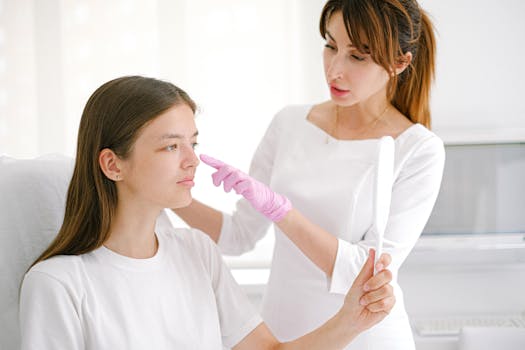
Patients considering Botox for forehead lines should expect a real conversation about goals, not just a price and a syringe. If the answer to “what are you hoping to change” is vague, the treatment plan will be vague too.
Questions Worth Asking at Your Consultation
A short list of questions makes the appointment more useful and surfaces any mismatch between your expectations and what the treatment can deliver.
- Which muscles are driving my forehead lines and crow’s feet, and where would you inject?
- How much movement should I expect to keep, and how do you decide the dose?
- Is Botox the right choice for this line, or is a filler or another approach a better fit?
- How soon should I expect to see a change, and when should I plan the next visit?
- What aftercare instructions do you recommend, and how do I reach you if I have a question?
- Are there findings on my skin today that I should have looked at separately?
The answers tell you as much about the provider as about the product. A clear, specific explanation is a good sign that the treatment plan is being built for your face rather than pulled from a template.
Frequently Asked Questions
How soon will I see results from Botox for forehead lines?
Visible change is not immediate. Within a few days, you can expect a noticeably smoother forehead with fewer lines as the treated muscles relax. Because the timeline varies from one patient to the next, ask your provider when to judge the result and when a follow-up makes sense for you.
Does Botox actually prevent new wrinkles?
Botox injections can prevent wrinkles from forming by reducing the repeated muscle contractions that fold the skin into the same creases. That is why some patients begin treatment while lines are still faint. Prevention is not the same as permanence, since the effect is temporary and movement returns if treatment stops.
Is Botox the same as filler for forehead lines?
No. Botox is a prescription medicine injected into muscles to temporarily improve the look of moderate to severe forehead lines, while fillers such as JUVÉDERM and Restylane add volume beneath the skin. Both are used for moderate lines around the forehead and eyes, but they address different causes and are often considered separately.
Can Botox treat crow’s feet as well as forehead lines?
Yes. Botulinum toxin is commonly used to treat lines in the upper one-third of the face, and crow’s feet sit within that zone alongside horizontal forehead lines. A provider will assess how the muscles around your eyes and brow work together and plan injections around your expressions rather than treating each area in isolation.
What should I do before booking a consultation in Denver?
Gather your medication list, note any prior cosmetic treatments, and write down what specifically bothers you in the mirror or in photos. Then choose a practice with a qualified injector who will assess your skin and explain the reasoning behind the plan. Colorado Dermatology Center schedules cosmetic consultations with that kind of evaluation built in.
Forehead lines and crow’s feet are a normal record of years of expression, and softening them is a personal choice rather than a requirement. What makes the choice a good one is accurate information: knowing which muscle creates the line, what Botox can and cannot change, how quickly the change appears, and who is holding the syringe. Start with a consultation, ask the questions on the list above, and let the plan come from an assessment of your own face.
 Posted in Procedures